Hyundai Motor Group builds Korea's 1st
waste-to-hydrogen complex in Cheongju
By Lee Min-hyung, The Korea Times - Hyundai
Motor Group has completed Korea’s first waste-to-hydrogen (W2H) production and
refueling complex in Cheongju, North Chungcheong Province, marking a major step
in its strategy to build a localized clean hydrogen ecosystem through resource
recycling.
The company held an opening ceremony
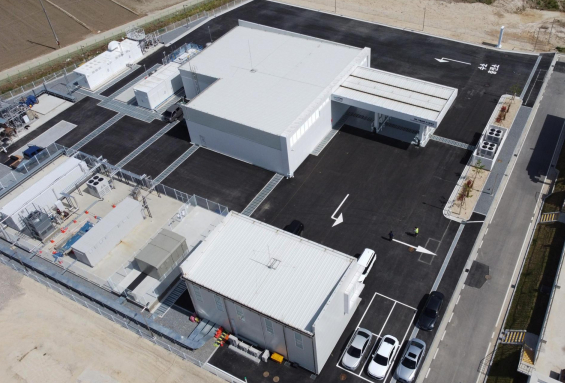
Thursday for HTWO ENERGY Cheongju. The facility converts biogas extracted from
sewage sludge generated in the city into clean hydrogen, which will be supplied
for local consumption under a circular energy model.
The carmaker said the project
demonstrates a "local production for local consumption" approach by
transforming municipal waste into carbon-free energy within the same region.
The company plans to expand similar
plants across the nation to accelerate the adoption of hydrogen and strengthen
regional energy self-sufficiency.
"HTWO ENERGY Cheongju represents a
circular economy model in which local waste resources are converted into clean
hydrogen and consumed within the same community," said Seo Gang-hyun, head
of the corporate planning office at Hyundai Motor Group.
"Hyundai Motor Group will actively
support Cheongju's efforts to become Korea's leading inland hydrogen city while
expanding this localized hydrogen production model into global markets."
The project reflects Hyundai's broader
hydrogen strategy under its HTWO brand, which encompasses the group's hydrogen
value chain spanning production, storage, transportation and mobility
applications.
Located on the grounds of a public
wastewater treatment plant, HTWO ENERGY Cheongju spans approximately 7,500
square meters and integrates hydrogen production, storage and refueling
operations at a single site.
The facility produces hydrogen using
biogas recovered from sewage sludge generated in the region. The biogas first
undergoes an upgrading process that removes impurities, such as hydrogen
sulfide and moisture, to produce high-purity biomethane. The refined gas is
then processed through a steam methane reforming system to extract hydrogen.
Additional facilities include high- and
low-pressure compressors, hydrogen storage tanks and a hydrogen refueling
station capable of supplying fuel directly to fuel cell vehicles.
The plant is capable of producing
approximately 500 kilograms of hydrogen per day, enough to fully refuel about
100 NEXO hydrogen fuel cell SUVs or roughly 30 hydrogen-powered buses daily.
The group plans to significantly expand
production capacity over the coming years. The carmaker aims to increase daily
hydrogen output to 2 tons by 2030.
All hydrogen produced at the facility
will be supplied across Cheongju and North Chungcheong Province, supporting the
region's transition toward cleaner energy while contributing to the nation’s
carbon neutrality goals.
The Cheongju facility is the latest
milestone in Hyundai Motor Group's effort to commercialize W2H technology and
establish decentralized hydrogen production networks.
The group selected Cheongju as its first
directly operated W2H base because of the city's location within Korea's
hydrogen logistics network.
Beyond Cheongju, Hyundai has already
carried out similar W2H initiatives in Chungju, North Chungcheong Province, and
Paju, Gyeonggi Province, where biogas is also being used to produce clean
hydrogen and establish localized energy systems.
Internationally, the automaker is
pursuing customized hydrogen ecosystem projects in markets including Indonesia
and Hong Kong, tailoring hydrogen production and utilization models to local
energy conditions.
The company views W2H technology as a
key pillar of its long-term hydrogen business, enabling municipalities to
convert locally generated waste into renewable energy while reducing greenhouse
gas emissions and improving resource efficiency.
Source: https://www.koreatimes.co.kr/business/companies/20260709/hyundai-motor-group-builds-koreas-1st-waste-to-hydrogen-complex-in-cheongju