OpenAI
to expand Daybreak cybersecurity initiative to Korea
By LEE
JAE-LIM, Korea JoongAng Daily - OpenAI is expanding its Daybreak cybersecurity
initiative to Korea's public and private sectors, a move that stands in
contrast to Anthropic's stringent standards for access to its Glasswing program
to foreign countries.
OpenAI
will open its Government Trusted Access for Cyber program — designed for
government agencies and institutions — to Korea, signing on along with Japan to
become one of four user countries, along with the United States and Canada.
Participants gain access to OpenAI's latest high-performance AI models.
"We
are pretty close to finalizing access for Korean government personnel,"
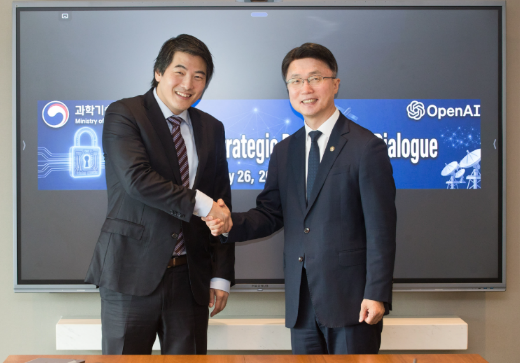
said Jason Kwon, the chief strategy officer at OpenAI, at a press event held in
southern Seoul on Wednesday. "I think they will need to gain access and
use the tools, and we expect them to produce results fairly quickly."
The
program will be overseen by the Korea Internet & Security Agency, while the
Ministry of Science and ICT is leveraging the partnership to establish ties
between the U.S. company and Korea's newly established AI Safety Institute.
OpenAI
has flagged Korea as one of the fastest-transforming countries in terms of AI
adoption, citing surging user numbers on Codex, OpenAI's coding agent. Kwon
said Codex's weekly active users in Korea have grown 10-fold since the
beginning of this year, and since the app's launch in February, daily
interactions in Korea have increased by more than 30-fold.
"Korea
is now among the top five countries globally in terms of Codex's adoption and
engagement," Kwon said. "In Korea, 50 percent of Codex requests are
noncoding tasks. Codex is being used not just by professional developers but
also by people looking to automate repetitive tasks, organize workflows and
turn ideas into useful tools for Korean users."
OpenAI's
cybersecurity push in Korea comes amid growing fears triggered by Anthropic's
Claude Mythos Preview — an unreleased AI model so powerful at finding software
vulnerabilities that Anthropic chose not to release it to the public. The model
had already uncovered thousands of previously unknown security flaws across
every major operating system and browser, including bugs that had gone
undetected for decades.
The
Glasswing project was formed as a defense initiative to channel the model’s
capabilities to patch the world’s digital infrastructure. Anthropic launched
the initiative with Google, Microsoft, Apple, Nvidia, AWS, Broadcom, Cisco,
CrowdStrike, JPMorgan Chase, Palo Alto Networks and the Linux Foundation, with
more than 40 additional organizations also granted access to scan their own
critical software.
Despite
discussions held between Seoul and Anthropic earlier this month, Korea's access
remains stalled, with domestic reports suggesting that a path in is unlikely.
Reports
indicate that the U.S. government holds considerable sway over Glasswing
membership. Kwon also noted that data will remain within Korea — a significant
assurance given that Korean law strictly limits the transfer of personal data
outside its borders.
"We
have made data residency available in Korea for a while now, which means that
when data is processed, it stays within the country," Kwon said. "The
other thing that we can do is also not store the data at all, which we do for
some of our customers, which tends to satisfy the requirements around data
security."
The
Daybreak program is divided into separate frameworks for the public and private
sectors, with the latter being the Trusted Access for Cyber initiative. OpenAI
is currently in talks with several Korean conglomerates to sign them up for the
program as well.
Beyond
cybersecurity, OpenAI is broadening its partnerships with Korean institutions.
On Tuesday, OpenAI signed a memorandum of understanding with Korea Water
Resources Corporation to develop AI-powered water disaster management systems
capable of addressing climate-driven water crises. Separately, OpenAI also
signed a cooperation agreement with the Korea Technology Finance Corporation to
support the growth of domestic AI startups, including the development of an
AI-based technology assessment system.
Source:
https://koreajoongangdaily.joins.com/news/2026-05-27/business/industry/OpenAI-to-expand-Daybreak-cybersecurity-initiative-to-Korea/2602085