GM Korea reaffirms commitment to Korean
operations
Korea JoongAng
Daily - GM Korea, the Korean unit of General Motors (GM), has reaffirmed its
commitment to maintaining operations, dismissing persistent market rumors of a
potential exit, while also noting that ongoing geopolitical tensions in the
Middle East have not disrupted its production or supply chains.
The
reassurance came during a media tour of GM Korea's production and export
operations in Changwon, South Gyeongsang, earlier this week, where company
executives highlighted stable production and continued investment in local
facilities.
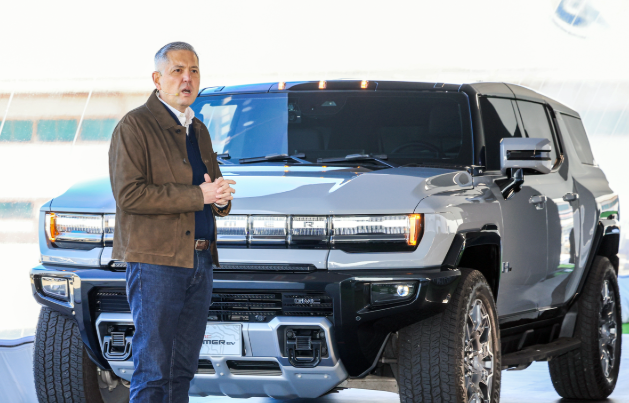
Asif Khatri,
vice president of manufacturing for GM's international operations, noted
speculation about a withdrawal from Korea is unfounded, stressing that the
company's plants in the country are operating at full capacity.
"I can
tell you that that's false, or we can go do something about it," Khatri
said during a press conference held at GM Korea's Changwon plant Tuesday.
"We've got five facilities across Korea. All of them are operating at max
capacity. We can't build enough right now."
The comments
come as GM has recently doubled down on its Korean operations, announcing a
$600 million investment plan in March to upgrade production facilities and
reinforce the country's role as a global hub for GM's small SUVs.
The
announcement came amid persistent industry speculation that GM may reduce or
eliminate its Korean manufacturing footprint amid growing trade uncertainties
tied to Washington's tariff policies introduced under the administration of
U.S. President Donald Trump.
GM Korea
exports approximately 410,000 units of its locally manufactured vehicles
annually, with about 85 percent of those shipped to the United States.
Khatri
emphasized that GM's continued investments demonstrate its long-term commitment
to Korea.
"The
investment comes in. We are putting a brand new press line of about 5,200
tons," he said, adding, "I'm here to tell you that we are here to
stay."
Despite
escalating tensions in the Middle East due to the ongoing Iran war, GM Korea
has not experienced any direct negative impact on production or parts
procurement, according to the company.
"So far,
we have not seen any negative impact, and there hasn't been any disruption in
our manufacturing operations," Khatri said. "We continue to produce
as we scheduled and as we planned."
He attributed
the operational stability to the company's proactive supply chain management
and support from the Korean government.
"It's
because of two reasons. One is the great work that our global purchasing and
supply chain team does in staying ahead of the crisis," he said. "The
second is the Korean government making sure essential commodities are not
impacted."
Bang Sun-il,
vice president of purchasing at GM Korea, said the company continues to operate
its plants "around the clock," supported by stable supplier
management.
The Changwon
plant stands at the center of GM Korea's global production strategy, serving as
a key hub for compact SUVs. Opened in 1991, the facility has an annual
production capacity of about 280,000 units and employs roughly 3,500 workers.
Backed by
cumulative investments of over 3 trillion won ($2.03 billion) between 2020 and
2023, GM Korea has established itself as a global production base for small
SUVs, with a combined output of the Trax Crossover and Trailblazer surpassing 2
million units.
The models
have also delivered strong performance in the United States, recording combined
sales of 422,792 units in the U.S. market last year, accounting for a 43
percent market share in the small SUV segment and demonstrating stable global
demand.
GM Korea's
broader production footprint, including plants in Bupyeong, Incheon, and
Boryeong, South Chungcheong, is also operating near maximum capacity,
reflecting strong global demand.
"GM
Korea's Bupyeong and Changwon plants have established themselves as core
production bases for GM's global small SUVs, supported by advanced automation
systems and world-class quality competitiveness," said Lee Dong-woo, vice
president of manufacturing operations at GM Korea.
"With
highly advanced manufacturing environments and stable production systems, we
are flexibly responding to diverse global market demands."
On future
investments, GM Korea said it will continue to evaluate opportunities,
including in electrified vehicles, while prioritizing profitability and market
demand.
"We have
very strong demand for the vehicles that we are producing. As a matter of fact,
we have unmet demand," said Khatri. "We are not complacent. We will
continue to make our products relevant in the market and meet customers where
they are."
Source: https://koreajoongangdaily.joins.com/news/2026-04-30/business/industry/GM-Korea-reaffirms-commitment-to-Korean-operations/2581618