AMCHAM
questions Incheon bridge toll exemption policy that excludes foreign residents
US chamber
warns exemption gap could dent IFEZ's global appeal
By Park Ung, The
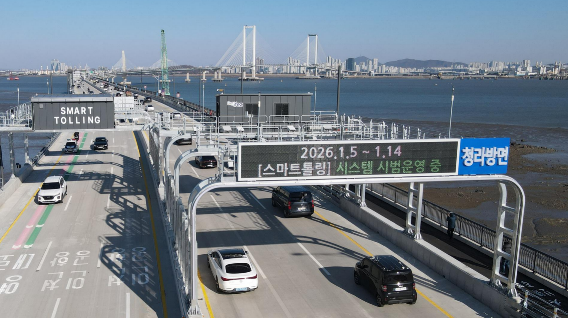
Korea Times - The American Chamber of Commerce in Korea (AMCHAM) raised
concerns Thursday over the toll exemption policy of the newly opened Cheongna
Sky Bridge in Incheon, which excludes foreign residents.
In a
statement, the chamber warned that unfair and inconsistent policy measures
across several similar cases may weigh on Incheon's ability to maintain a
competitive business environment and attract foreign residents.
The
controversy, first reported by The Korea Times last December, has prompted
questions about the use of nationality — rather than residency or economic
contribution — to determine access to public benefits in the Incheon Free
Economic Zone (IFEZ), one of Korea's most globally engaged business hubs.
Their foreign
neighbors and family members, however, are not eligible for the exemption,
because the city ordinance limits eligibility to addresses registered under the
Resident Registration Act, while foreign residents' addresses are recorded
separately under the Immigration Act.
“Clarity and
consistency in public policy are critical for businesses,” AMCHAM Korea
Chairman and CEO James Kim said in a statement. “A predictable policy
environment is especially important in places where global professionals live
and work. Policies that shape daily living conditions extend beyond convenience
— they influence regional investment attractiveness and business confidence.”
The chamber
noted that the policy stands in contrast to the approach taken for the two
older bridges in the region — Yeongjong Grand Bridge, opened in 2000, and
Incheon Grand Bridge, opened in 2009.
The city's
ordinance on toll exemptions for the two older bridges also defines eligible
beneficiaries as residents who have completed “resident registration,” which
effectively excludes foreign residents.
In practice,
however, foreign residents are eligible for a one-time round-trip toll
exemption on the two older bridges under the same conditions as Korean
nationals, as another ordinance on support for foreign residents and
multicultural families guarantees equal access to public facilities and
benefits unless stipulated otherwise by law.
Kim added that
the policies are also closely tied to the government's broader goal of
strengthening regional economic vitality and Korea's competitiveness as a
business hub in Asia, particularly at a time when regional investment and
balanced growth are receiving increased national attention.
The concerns
carry particular weight given the bridge's location. Cheongna Sky Bridge serves
the IFEZ encompassing Songdo, Yeongjong and Cheongna — areas that have evolved
into internationally connected communities drawing Korean and foreign
professionals across logistics, aviation and advanced industries.
AMCHAM noted
that “the way local policies are designed and implemented can shape broader
perceptions of the region's living and working environment.”
From a
business perspective, the chamber added, companies tend to weigh policy clarity
and consistency over immediate financial impact, and uneven application of
benefits across residents in similar circumstances can factor into workforce
and operational decisions.
The chamber
acknowledged the fiscal and administrative context surrounding the Cheongna Sky
Bridge toll exemption policy. Local authorities have indicated that
compensation arrangements related to existing bridges and other structural
considerations limit the scope of toll support measures.
While
recognizing these constraints, AMCHAM noted that the region's international
demographics and long-term competitiveness also merit consideration in how such
policies are designed and implemented.
The Korea
Times has contacted Incheon city officials about the toll policy multiple times
since December. Representatives from the city government and city council said
they would review the issue, but no review results or policy plans have been
released yet.
Source: https://www.koreatimes.co.kr/southkorea/society/20260326/amcham-flags-incheon-bridge-toll-exemption-policy-that-excludes-foreign-residents